Product
SCR Denox
Selective Catalytic Reduction
Similar to the SNCR process, Selective Catalytic Reduction (SCR) involves introducing either an ammonia or urea-based reducing agent into the flue gas of an industrial combustion source. However, in contrast to SNCR, SCR utilizes a catalyst that enhances the chemical reaction, enabling it to
occur at lower temperatures. The operating temperature range for SCR typically spans from 150°C to 550°C.
SCR stands as the most effective and established technology for reducing Nitrogen Oxides (NOx) emissions from industrial sources. Flowvision’s engineered systems stands out in this field, achieving NOx emission reductions of up to 96% with extremely low ammonia slip.
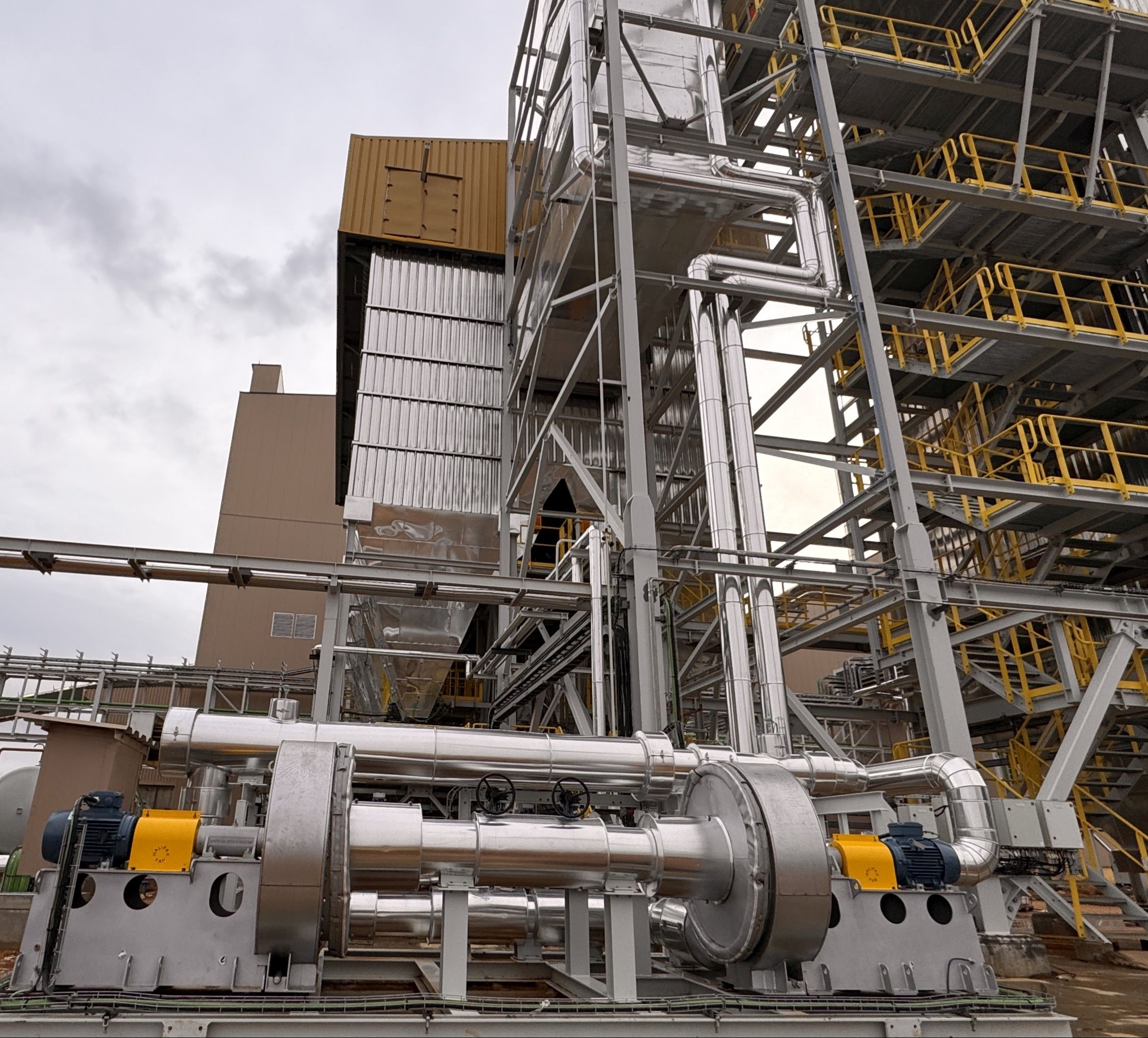
Flowvision's engineered systems stands out in this field, achieving NOx emission reductions of up to 96% while keeping ammonia slip close to zero.
Flowvision SCR systems technology
In a Flowvision SCR system, the reagent Injection system offers flexibility through two primary methods: the direct atomization of aqueous ammonia into the flue gas duct upstream of the catalyst, aided by a Vortex Gas Mixer, or applying an Ammonia Injection Grid (AIG) positioned before the
catalyst.
Our turn-key solutions encompass the entire spectrum of SCR system components. This includes the provision of reagent unloading & storage systems, precise reagent Flow Control Units (AFCU), sophisticated injection and mixing systems, as well as the fabrication of mixing ducting,
SCR reactor housing, and specialized flow rectification/straightening and mixing devices.
Incorporating the SCR catalyst within our scope of supply allows Flowvision to offer comprehensive process guarantees for the entire SCR system. This commitment ensures that beyond the system’s start-up and commissioning, Flowvision provides prompt and effective support, ensuring the seamless operation of the complete system.